Above and Below the Channel: Aerial Views of the Seine and the Engineering of the Eurotunnel
Where the River Turns Slowly and Distance Begins to Blur
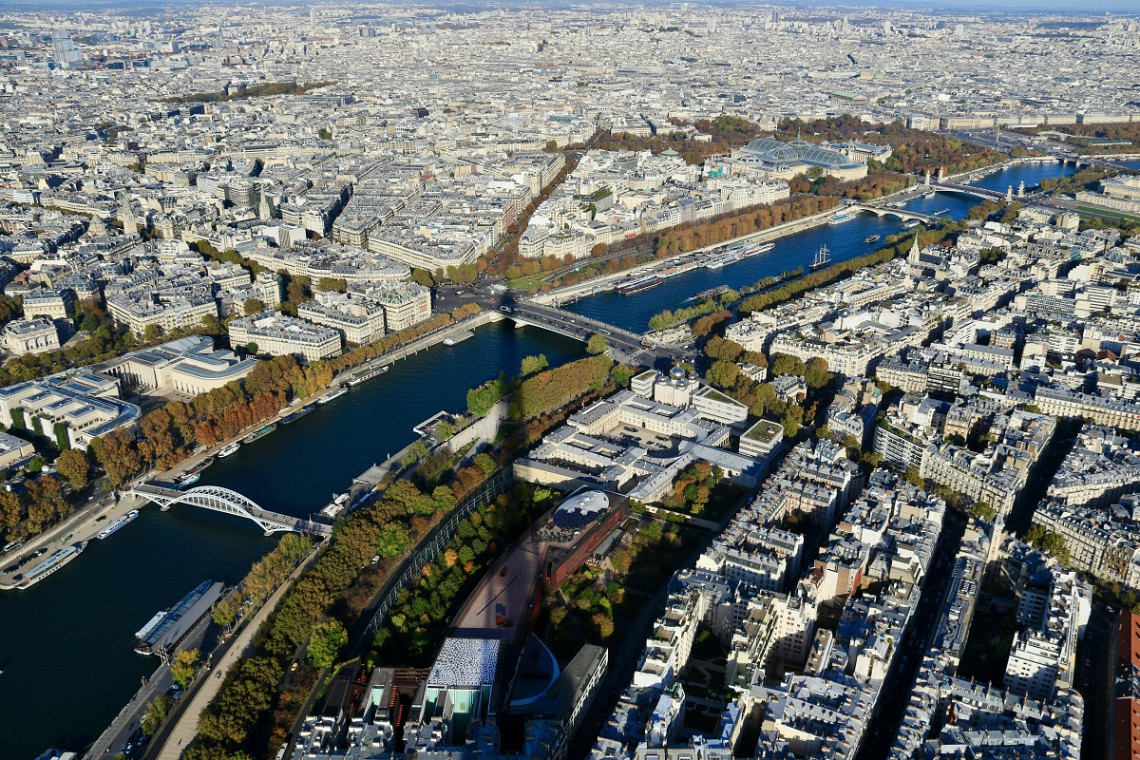
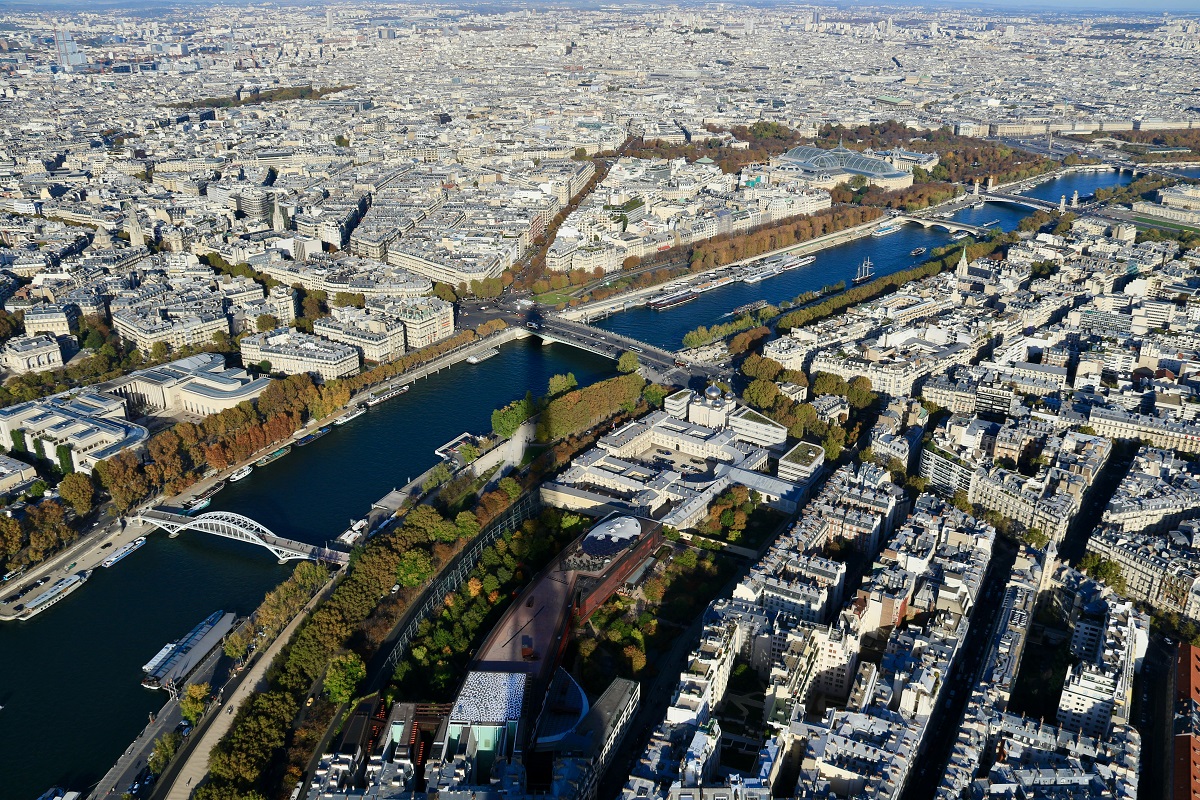
Seen from the ground, the Seine feels close — damp air, stone embankments, the faint echo of footsteps along bridges. But from above, something shifts. The river loosens. It becomes less physical and more like a line drawn without urgency across a pale surface.
There is no moment of spectacle in the ascent. The city simply flattens into rhythm — roof, bridge, island, curve. Light fragments across the water and then disappears as the aircraft tilts. The edges of Paris dissolve into fields. The river becomes memory before it fully leaves sight.
Crossing the Channel Without Ever Feeling Its Weight
Some days the sea is visible beneath the wing, pale and uninterrupted. Other days cloud cover erases it entirely, and for several minutes there is no distinction between sky and water. Inside the cabin, the engines maintain a steady tone. Someone adjusts their seat. A window shade slides halfway down and stays there.
Later in the week, you might fly from Paris to London, reversing the direction without altering the sensation. The crossing remains brief, almost abstract. The Channel appears as a muted sheet dividing land from land. Ships drift slowly across it, their wakes dissolving almost immediately.
You do not feel the cold pressure beneath the surface. You do not sense depth from this height. You simply pass over it. The separation between capitals feels less like a barrier and more like a pause suspended between two familiar outlines.
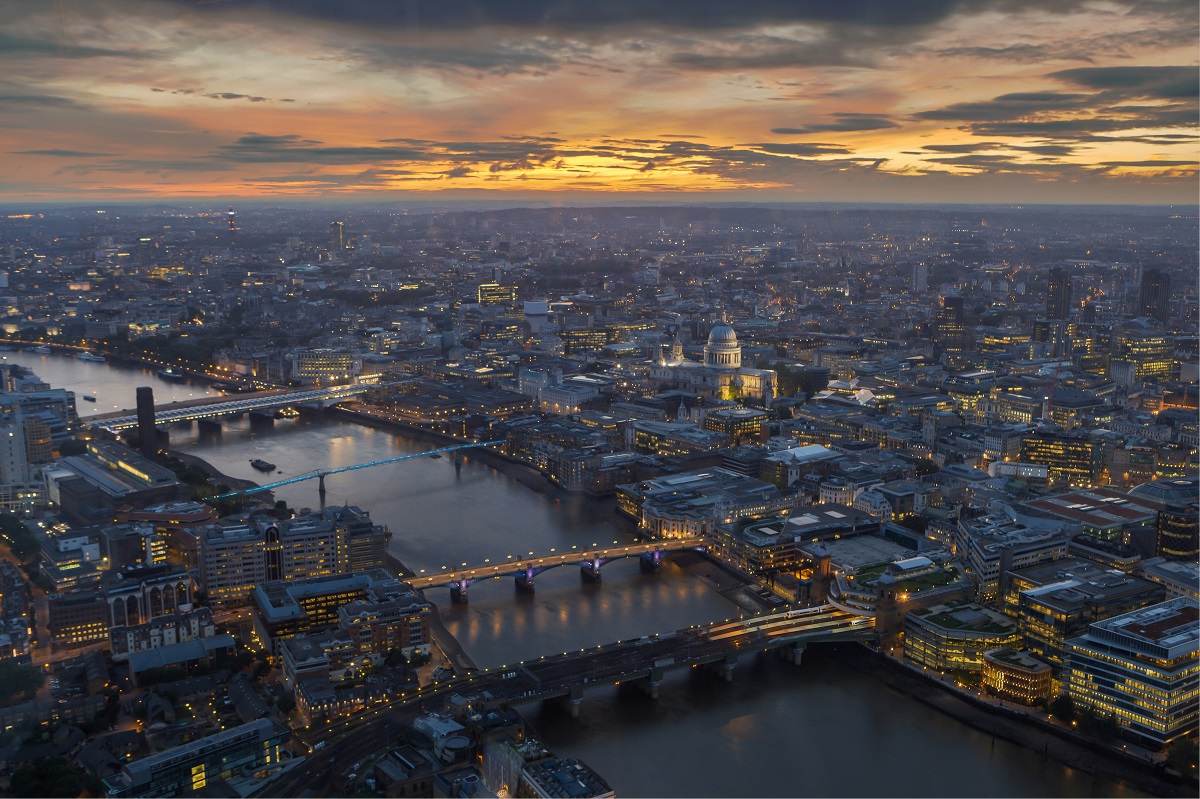
When coastline returns beneath the aircraft, the transition is quiet. Fields gather first. Then suburbs. Then the river in London, darker than the Seine, widening as it curves.
There is another route beneath that same stretch of sea. The Eurotunnel does not appear on the horizon. It does not interrupt the water’s surface. Its existence is known through timetables and platforms rather than sightlines.
The journey often gets reduced to a phrase — London to Paris — as if saying it quickly makes the geography smaller. From the window of a departing aircraft, Paris rearranges itself into pattern. Rooftops gather in quiet clusters. Streets narrow into threads. The river bends without resistance, widening and tightening without any visible strain.
Inside the tunnel, movement becomes internal. Windows reflect carriage lights. The sense of motion continues without scenery to confirm it. Time stretches slightly. Conversations remain low. The structure surrounding the train holds steady against unseen pressure.
Above, waves repeat their surface patterns without acknowledging what lies below. Beneath them, reinforced walls contain the sea’s weight without drama. The two layers remain separate yet simultaneous.
It is difficult to imagine them meeting.
Watching Cities Reassemble From Fragments of Light
When descending toward London, the city does not appear all at once. The Thames emerges gradually, less reflective than the Seine, cutting a broader path through the city. Buildings cluster, separate, repeat. Patches of green interrupt terraces and roads.
Paris from above feels gathered; London feels extended. Yet from this height, both reduce themselves to arrangement rather than experience. Noise has not yet returned. Texture has not yet reasserted itself.
For a brief suspended moment before landing, everything remains outline only. The city exists as suggestion — recognisable, but distant. Then wheels meet runway, and abstraction gives way to sound.
Sky, Surface, Seabed — and the Space That Connects Them
It becomes difficult to say which crossing lingers more clearly — the one through open air or the one enclosed beneath the seabed. From above, the distance appears manageable, softened by altitude. From below, it feels deliberate and contained, shaped by engineering rather than horizon.
Yet neither insists on its importance. The Channel continues shifting at the surface. Aircraft trace brief lines across the sky. Trains move through engineered darkness. People read, scroll, or stare without fully registering where they are.
Later, memory blends these movements together. The curve of the Seine seen from altitude overlaps with the muted hum inside a tunnel carriage. Cloud replaces water in recollection. Light on rooftops merges with the quiet pressure beneath the sea.
What remains is not the fact of crossing, nor the explanation of how it happens. Only layers — sky above, water at the surface, steel below — existing at once.
And somewhere between them, the journey continues quietly, without ever fully surfacing.
Where the Crossing Fades but the Continuity Remains
Later still, the specifics begin to loosen. You may not remember which seat you had, or whether the sea was visible that day, or how long the tunnel felt in real time. What remains is more atmospheric than factual — the impression of layers moving quietly past one another. Sky holding aircraft in its pale suspension. Water shifting restlessly at the surface. Steel set deep beneath, steady and unseen.
The cities resume themselves without ceremony. Paris returns to stone and riverbanks. London settles back into terraces and the slow curve of the Thames. The Channel does not change. It continues to separate and connect in equal measure, indifferent to how it is crossed.
And somewhere in that layered space — above, at the surface, below — the journey continues even when you are no longer in motion. Not dramatic. Not resolved. Just present, stretching quietly between two capitals that have grown used to being linked, whether by light overhead or by passage through darkness beneath the sea.
Tara Lets Anywhere features voices from all over the world — travelers, writers, expats, and local experts who write, often from their own firsthand experience. We believe great stories have no borders, and our global contributors bring those stories straight to you.


You May Also Like
Hidden Gems: 15 BREATHTAKING Waterfalls in Spain
Glistening Danube Bends and the Golden Grain Fields of Pannonia: Riverine Transitions